A content model for FEC.gov
Just enough reporting instruction, delivered just in time
Background
The Federal Election Commission (FEC) administers and enforces federal campaign finance law. For every presidential or Congressional election, the FEC governs how campaigns raise, account for, and spend funds. In 2017 I joined a distributed team of designers and developers working with the FEC to redesign their website.
When I joined the team, the focal points of the work were 1) completing migration to a beta version of the new site suffiently to make it the primary site; and 2) coaching the FEC’s content managers, designers, and engineers to manage the site effectively without us.
Much of the content work that had already been done focused on developing plain language help for people who needed to understand the rules: eligibility, deadlines, definitions, etc. What had not been worked on was reporting guidance. Every candidate, party, and political action committee that engages in political activity for federal elections has reporting requirements. Since the FEC’s enforcement actions and data publication stem directly from what people report, getting this right was essential.
The problem
The FEC had plenty of material to support reporting: software to manage and automate filing, along with its user manual; complex scenarios designed to train multiple reporting needs at once at in-person conferences; full-scale campaign finance guides for each type of campaign committee; video walkthroughs of the software; and FAQs. For nearly every reporting task, there was some overlapping combination of examples and instruction available, each produced and managed by a different set of people.
Research showed that repetitive and disparate reporting example content meant people were never certain they had the most up-to-date information, or complete information. Siloing the content types away from each other confused users. Teams at the FEC were repeating work they didn’t need to. And keeping them separate from the help content meant it was never available as-needed in the amount needed; veteran campaigners might know it, but it was effectively hidden from people new to the field. They needed reporting information in digestible amounts, right when they needed it, with no mystery pieces left out.
The work
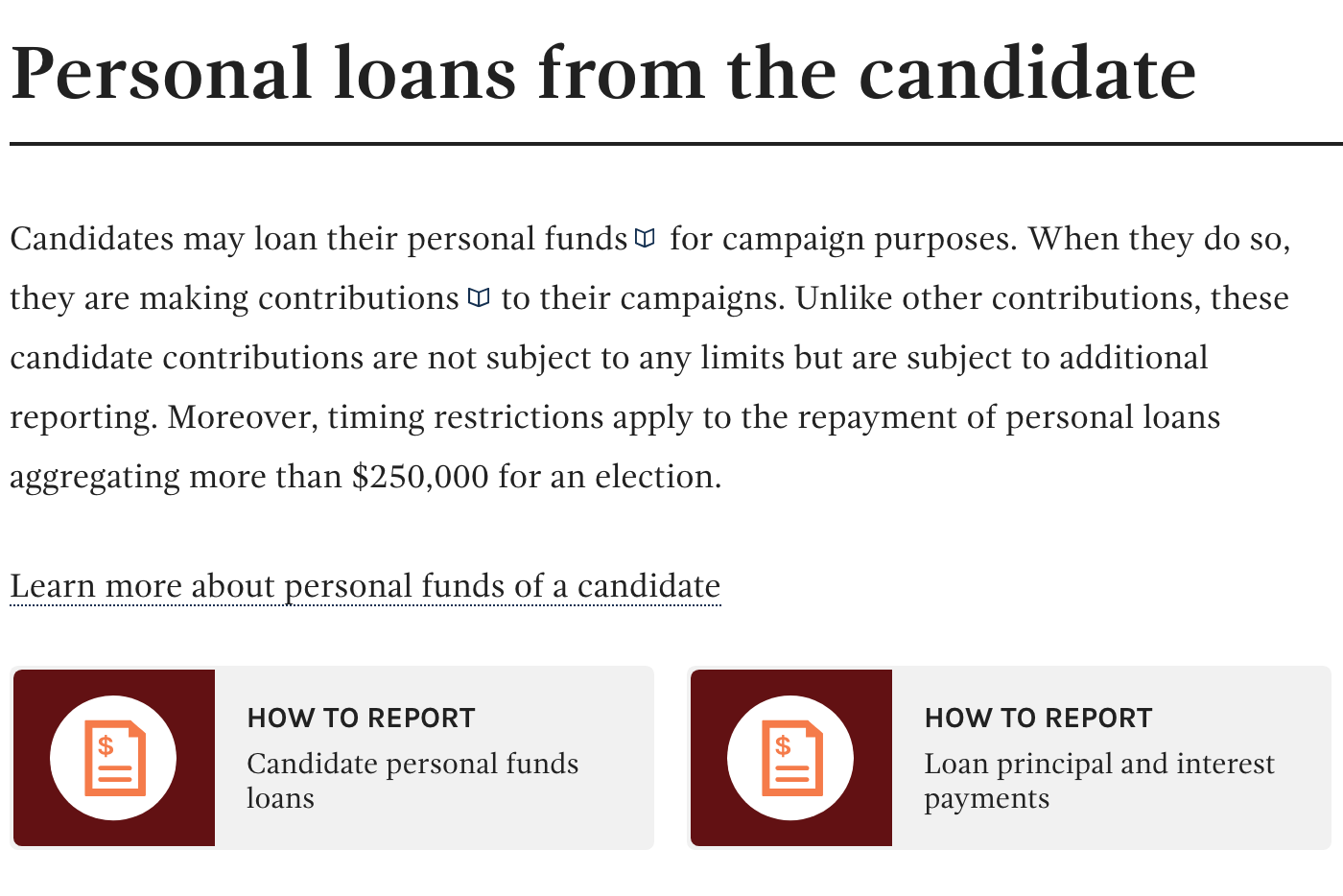
I partnered with a senior FEC analyst to select relatively complex examples of reporting needs (for example, how to report a loan from a candidate to their own campaign and then how to report repayment of that same loan). These served as the basis for the instructions we hoped to develop.
Our next task was to figure out how to contextualize reporting as an activity. Most reporting is quarterly, but it stems from actions taken every day. So first we established that every one of the reporting needs, both our chosen examples and others, corresponded to existing or in-progress help content. (For example, there was already content about whether and how a candidate could make a loan to their own campaign, and what the rules were for repaying that loan.) The opportunity was clear: when someone encountered an unfamiliar situation, that was a chance to explain both the rules and how to report their activity under those rules. Giving that context to reporting could make it more memorable.
From there, I pulled the relevant information for each of our chosen examples from the existing reporting materials. I built single narratives for each example, shifting language to abide by our new style guide and to take advantage of the FEC glossary. We incorporated supporting media like images of standard forms and links to instructional video where appropriate.
As I wrote the first sample, I outlined it in a basic content model. For each new sample, I adjusted the model. Since we’d chosen complex samples, we expected the model that resulted from my sample versions could cover most use cases cleanly.
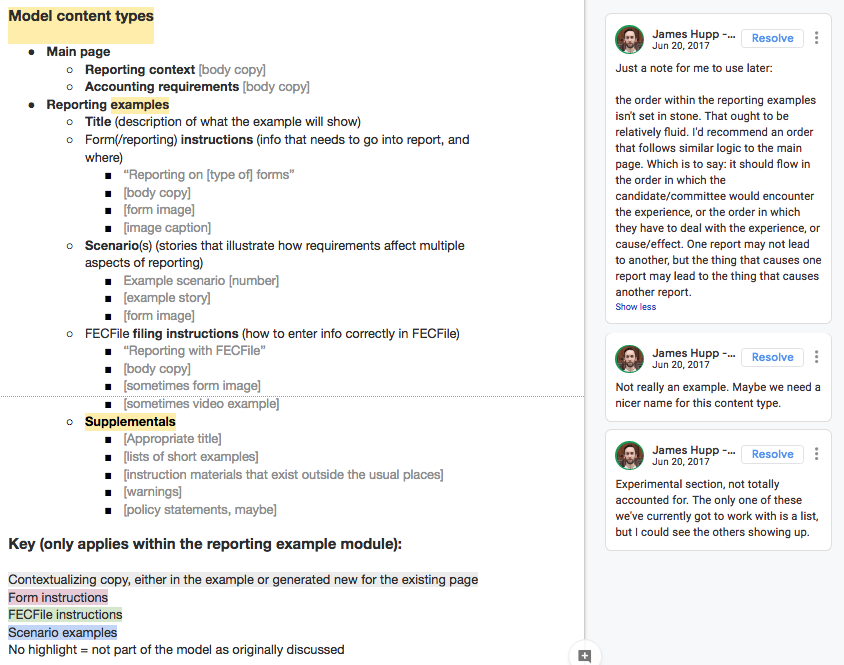
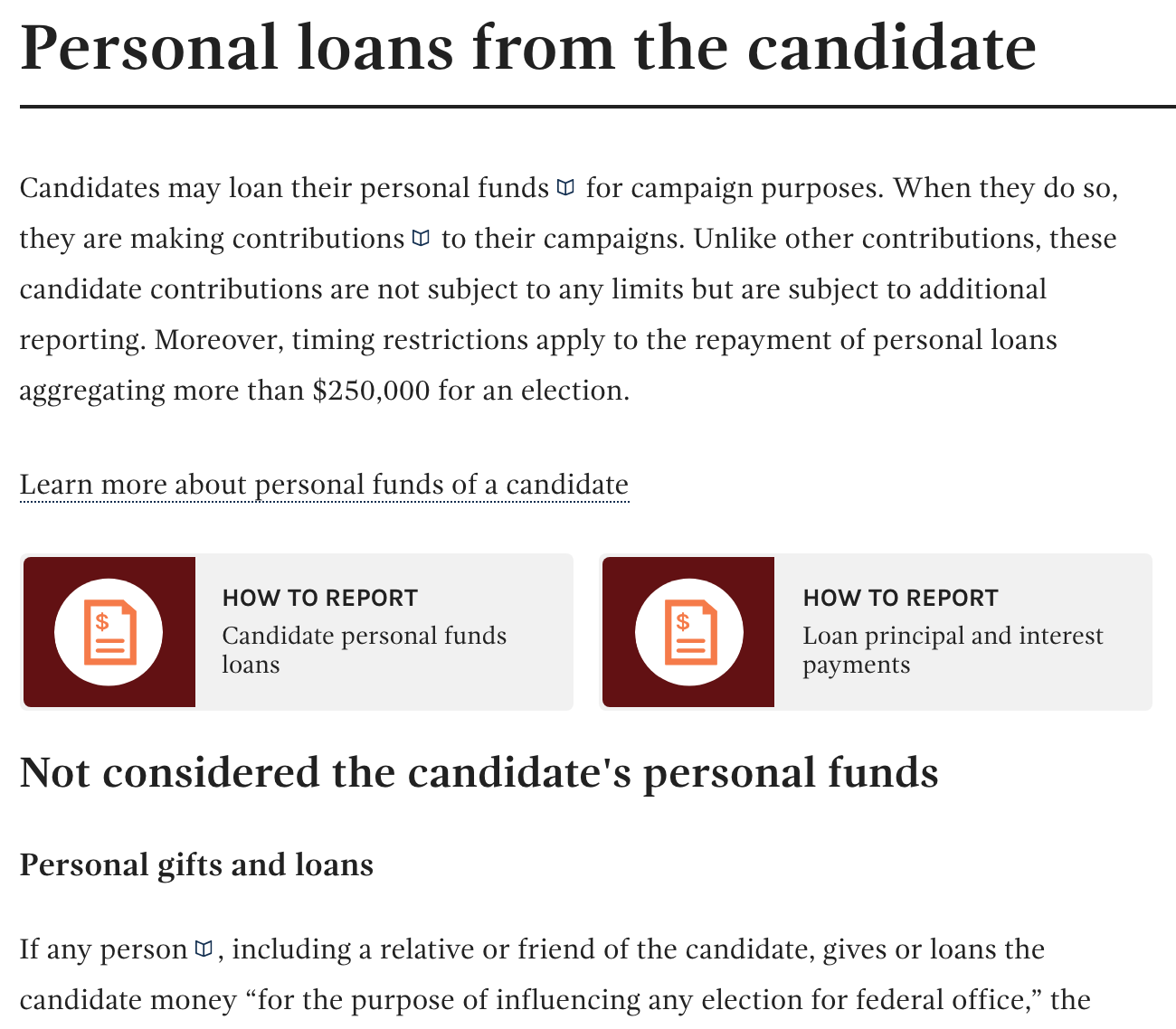
I then worked through approaches with our visual designer, adjusting language and hierarchy to make sure the structure could work with our principles and style. Once implemented, the result was a new content type in the CMS called reporting examples, presented individually on the website as How to report: [need]. And because it was its own content type, we could drop cards linking to the reporting examples into any help content where they were relevant. The help content could lead people naturally into the reporting examples.
Lastly, we needed to make sure the new reporting example format was usable for the FEC’s content managers. I created a style guide for the components of the model. The analyst built a few, then she and I worked through the guide to make sure it addressed her questions so that the other content managers from her division could develop examples easily. Our visual designer worked through some of the same challenges with a graphic designer at the FEC who developed supporting imagery for the examples. Following our work together, the FEC published dozens in the new format in the space of a few weeks.
Results
The reporting examples eliminated the partial overlaps of information, brought different aspects of the reporting process together out of their siloes, reduced duplication of work, and delivered the content to users right where they needed to understand it. Because the content managers from the FEC helped develop the process and the style guide, they were ready to implement it once we’d demonstrated that it works. Usability testing with campaign staffers demonstrated it was easy to follow and learn from.
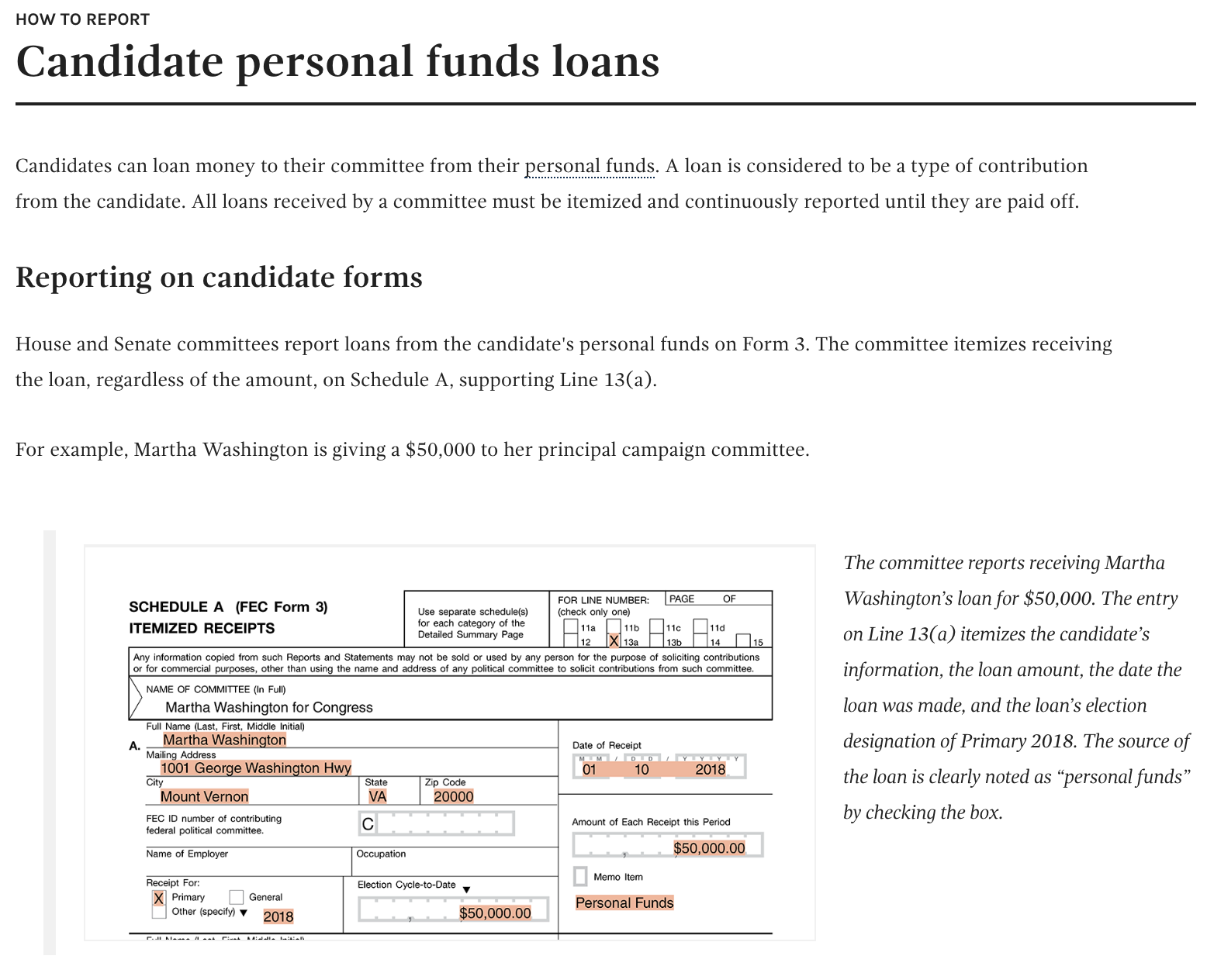
The reporting example used most consistenly in this case study is Candidate personal funds loans.